Showing posts with label chickens. Show all posts

Sunday, September 8, 2013

Growing up


Remember these fuzzy babies, the Buff and Welsummer chicks we hatched about 11 weeks ago? They don't look like that anymore. Say hello to our teenagers.


The Welsummers are a new breed for us, and it has been so interesting to see the differences between their growth and behaviour and that of the Buffs and Australorps. They're quite a bit smaller, for one thing, and are maturing much faster. The cockerels, who started crowing at about 9 weeks, are showing some spectacular colours...


...and even the pullets' more subtle colouring is just beautiful.


There's nothing like a new breed to show you all the ways in which you have been taking your old breeds for granted. Buffs and Australorps, being as big as they are, are not flyers. Sure, they'll flap their wings to soften a landing as they jump down from the roost, or to give some acceleration as they run, but they never fly. The Welsummers, on the other hand, have taught us all about verticality. Boop-booping is a whole different business with them: it's not enough to usher them along with a boop-boop stick, you have to factor in the likelihood that they will fly right over the stick, you, and anything else in the way.

Postscript: The Welsummers have matured into a much more dignified adulthood! They have lots of personality, curiosity and energy, are great talkers, have been consistently good layers, and the verticality issue is not a problem any longer. And they can boop boop like the best of 'em!

The baby Buffs, on the other hand, now that the feather picking issue has resolved itself, are a more predictable bunch. Kim has been away the last few days so I've been on Chicken Management duty, and I've appreciated their willingness to come, predictably, thankfully, back into their enclosures at the end of the day. No chasing them around the bushes, no fishing them off the rafters of the coop, no wings beating in my face.


Thank you, baby Buffs. What good chickie-chickies.

Monday, August 19, 2013

Homesteading University


Kim has had her hands full this summer with all things chicken related, much of it good and some of it challenging. And then this weekend, something new: bumblefoot.

Bumblefoot is an infection in a chicken's foot, caused by anything from a cut or scrape to a splinter from a roost or damage done by jumping down from a roost that's too high. If the infected tissue is cut out and the foot treated with antibiotics the chicken can go on to lead a long and happy life, but if left untreated bumblefoot can eventually spread to bones and other tissues and be fatal. The surgery is usually an at-home affair because (1) it's easy, (2) most vets have no idea about chickens in general and bumblefoot specifically, and (3) even if they did the cost would be prohibitive.

Kim noticed one of her hens limping on Saturday, had a look at her foot and found the tell-tale black scab. As luck would have it our friends Toni and Steve had been telling us about treating their own chicken for bumblefoot just the week before, and even luckier, they were willing to come to Mucky Boots to give Kim a lesson.

Here's the process:


Step 1: Spa treatment. Ms. Bumblefoot was treated to a warm epsom salts soak. Yes, that's our kitchen sink. And yes, we disinfected the heck out of everything when we were done.


Step 2: Surgery. Steve used a small exacto knife to slice off the scab. This sounds gruesome but it was actually very straightforward. Ms. Bumblefoot, wrapped up in a towel and placed on her side, took it all in stride. Once the scab was gone the infected tissue was visible, and it was a matter of gently and carefully cutting it out while leaving the healthy tissue behind. This case of bumblefoot was caught quite early so there wasn't much infected tissue to remove, and Ms. Bumblefoot was good at letting us know when we were tinkering with healthy tissue instead by starting to struggle instead of lying quietly. Toni suggested we err on the side of removing too little tissue rather than too much; more can always be removed in the days following surgery.


Step 3: Bandaging. We daubed the wound with antibiotic ointment, covered it with a non-stick gauze pad cut down to size, then wrapped it up with stretchy self-sticking tape.

Step 4: Repeat. Every one or two days we will repeat the whole process, looking for and removing any more infected tissue until we've got it all and the wound can heal. In the meantime Ms. Bumblefoot is being housed in one of the brooder boxes, up high on saw horses so she's out of the dust of the chicken yard and can survey the goings on of her friends down below.

We were lucky to have had friends willing to share their expertise - expertise gained through a lot of internet surfing and YouTube watching, plus a large dose of bravery in being willing to translate that into practice. Operating on a case of bumblefoot is just one example of a skill that isn't generally known any more and people are needing to learn again. Wouldn't it be great to have an electronic bulletin board where people in a community could post a request ("Looking for someone who knows how to operate on bumblefoot") or make an offer ("I'm canning pickles on Tuesday between 2 and 5 if anyone wants to learn how"). Kind of like Craigslist, but for the free exchange of homesteading skills. An informal, locally based Homesteading University.

I know there are all kinds of reasons why this might not be practical, like liability, and the dangers of welcoming strangers into your home. But couldn't it be a way to spread knowledge, build resilience, and turn strangers into a community?

Sunday, July 21, 2013

Math equation of the day

1 uncovered straw bale 
14 chickens 
2 turned backs 
______________
= 1 big mess

Tuesday, July 16, 2013

Chicken pickin'


I think it's past time for an update from the Mucky Boots chickie front. Not only do we have the sixteen Black Australorp chicks (now ten weeks old, I think - I can never keep track), we now have eighteen Buff Orpington and eighteen Welsummer chicks, all hatched right here. In case you're keeping track, that's 52 chicks. Wowza.

First the Australorps. They are now living in the coop, in a separate enclosure from Hector and the Hens but hanging out when them during the day. We continue to have trouble with our local racoons and eagles, so when one of us isn't around the teenagers are confined to the chicken yard, lounging on the roost...


... but when Kim makes an appearance they stop whatever they're doing and run to her.


It took only a couple of days to teach them how to come when called and how to put themselves to bed, in the right enclosure, at night. The other day an eagle flew low over the area where they free range and they all bolted immediately for the coop, unlike some of the grown ups who stayed outside to see what was going on. They are easily the sweetest, smartest and best behaved bunch of chicks we have ever had.

Which leads us to the babies Buffs, easily the worst bunch of troublemakers we have had. More about that later. 

Here are the Baby Bunch at a few days old. The Welsummers are another heritage breed, smaller than the Buffs and the Australorps. They lay a large, terra-cotta coloured egg, and are known for their appearance on the Kellogg's Corn Flakes box. Holy moley, are they cute, racing stripes and all.


Kim built a new brooder box for the Baby Bunch, since we've never had so many chicks at once before. It's huge, about four feet by six feet, and cleverly made of plywood panels zip-tied together so it's easy to break down and store once we're finished with it. (Yes, you really can construct anything with duct tape and zip ties...).


Kim has been experimenting with a new watering system - she's fed up with rambunctious chicks flicking litter into the regular waterers, so she bought some nipples from a local dealer and used some PVC pipe (note the zip-ties) and a big jug on an elevated stand to gravity feed the water. It works like a hamster waterer: the chicks jiggle the nipple with their beaks and a few drops of water come out. They took to it like a charm.


The Baby Bunch are now three weeks old, and are already spending the day in the chicken tractor eating bugs and grass. We love the Welsummers: they're curious and calm and beautiful to boot.

The Buffs - they're another story. About a week ago Kim noticed one of the Buffs had a bloody tail and realized there was some feather picking going on. With chicks this usually arises when the tail feathers start to come in - the quill part is blood-rich and looks darker than the surrounding skin or downy fluff, and as any chicken farmer knows, the sight of blood can throw an otherwise civilized chicken flock into a cannibalistic blood frenzy. Fortunately Kim was right there when the frenzy started, and she was able to whisk the victim to safety. But as she continued to watch she realized the feather picking was more widespread, and so  the Mucky Boots Anti-Pick Campaign was launched.

Feather picking is something you want to nip in the bud as fast as you can. Not only can the chicks do serious damage to each other, it can be a habit that, once established, is very hard to break. So all other projects came to a screeching halt while Kim got on the case.

After a few phone calls and some internet research Kim went to our local farm store and bought some Stop Pick, which is a cayenne-based ointment you dab onto the areas being picked. The red colour attracts the attention of the pickers, but one taste is supposed to discourage them from continuing. And it worked, sort of. The frenzy definitely stopped, but the picking didn't entirely cease.

For the next few days Kim was parked beside the brooder, watching to see who the culprits were and then banding them, so she could keep track. She alternately separated the chicks being picked and the pickers, trying to see which worked best, and finally settled on keeping the pickers away from the rest of the flock. But they needed to be separated from each other, too, and she didn't have enough small cages. So she built some, using plastic tubbies, hardware cloth and (you guessed it) zip ties.

And the Mucky Boots Solitary Confinement Reform School for Pickin' Chickens was born.


There are currently four residents - all Buffs of course - and the problem appears to have ceased. Kim has also switched to a red light bulb in the brooder (to camouflage pick-worthy areas) and has attached pockets made of half-inch hardware cloth to the sides of the brooder that she fills with kale and other greens, to give the chicks something to pick and pull at other than each other. And she made the decision to get the chicks out into the tractor sooner than she might have otherwise, to keep them distracted and busy and make sure they're too tired at the end of the day to resort to bad behaviour. Can you tell she used to be a teacher?

We have never had this problem before, and this is the fifth or sixth batch of chicks we have brooded under similar conditions. Our best guess was that we gave them too much light (by way of the heat lamps that stayed on all night), which was part of the reason Kim switched to a red bulb (and why we spent an hour tacking tar paper over all the windows of the workshop to block the light, causing our neighbours to wonder if we were launching a grow op). Fortunately the weather is warm enough now that the workshop is warm enough through the night for the partially-feathered chicks, so even the red bulb gets turned off for nine hours of dark sleeping time.

And how have the Welsummers done through all this drama? They have minded their own business, committing nary a pick themselves.

Postscript: Kim wanted me to say that it's not all the Buffs causing problems, just four of them. Four troublesome chicks giving their hatch mates a bad name. But if there's anyone who can help them along the reform path back to the sweet and amusing Buff breed we know, it's Kim.

Wednesday, June 26, 2013

Goodbye Gump


We said a difficult goodbye to Gump yesterday. Gump was our two-year-old, hatched right here Buff Orpington rooster, and our hearts are heavy.

Gump was special right from the start, in an endearingly odd kind of way. He was part of a hatch that was predominantly cockerels, and even though he was the biggest of the bunch he was the lowest on the pecking order. He was never part of the flock - he would wander his own way, doing his own thing in a gentle, clumsy, semi-clued-out kind of way. The other chickens would come running for scratch at the end of the day but Gump would only look over, mildly curious, and wander off into the bushes. We worried about Gump.

Once Gump and three of his young flock mates refused to come into the coop for the night. We're not sure if something spooked them or if they just wanted a camp out, but they lodged themselves into a thick stand of prickly bushes that we couldn't get into. And then, once night fell, there was no budging them. In the morning we were minus one pullet and Gump was missing a few tail feathers, but no matter how nicely we asked to hear the story of their adventure, nobody was talking.

When it came time to pick the cockerel who would be given charge of the flock we chose Gump. By that time it was clear the hens in the flock loved him: where Gump went so did they. They liked his gentle, protective ways, and so did we, and Gump proved we made a good choice. He was a big, gentle, slightly uncoordinated giant, and he took his rooster duties seriously. He did a great "I'm the rooster" dance (if you've never seen it, the rooster drops one wing and dances around the hen in a circle), he showed the hens good places to get food and lay eggs, and he kept a watchful eye out for overhead predators.

In recent months, however, one roosterly duty proved difficult for him: sex. Always a bit clumsy, he became increasingly lame, which meant he wasn't so good at mounting the hens. As a consequence, the fertility of our eggs began to suffer, and since Kim does a brisk business with hatching eggs through the spring, this was a problem. We began to look for a replacement rooster, but we were clear that Gump would stay with us no matter what.

It didn't work out that way. Even though we could find no reason for his lameness, it became more and more difficult for Gump to get around, to the point where he spent most of his day sitting down. We didn't even want to visit him in the chicken yard, because when he saw one of us he would struggle painfully to his feet to do the rooster dance. And so we finally made the decision to put him down.

We're still not prepared to do this ourselves, and so we took him to our local slaughterhouse. And today Kim took his carcass to a local food kitchen, where one of the diners said "Oh good, chicken soup."

Gump was good from beginning to end. Goodbye, Gump.

Wednesday, June 19, 2013

Third child syndrome


You know how it is: the family photo albums are full of pictures of the first child. The second child not so much. And the third child? The third child is lucky even to be noticed.

It's like that with batches of chicks. I'm not even sure which batch we're on now - I have lost count - but the third child syndrome is full blown because I haven't even mentioned the current brood, let alone made them the subject of their own post. So here they are, the most recent additions to the Mucky Boots Flock: sixteen healthy, pooping, scratching, cheeping, almost-seven-week-old Black Australorps.


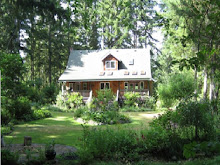
Right now they sleep in two brooder boxes (that's one of them in the photo at the top of the post) in the workshop, but during the day Kim and I ferry them out to the chicken tractor which is set up right now in the orchard. They're learning to eat bugs and grass, and experiencing sunshine, bird calls and even a bit of rain (although they have plenty of protection). The orchard is where the grown up Australorps pasture, and they have all been getting acquainted through the chicken wire of the tractor. Hector, the patriarch, is particularly interested in the little ones, as is the smallest hen, who would rather keep an eye on the youngsters than head back to the coop for an afternoon treat of scratch.

One of the funniest moments of every day is when the chicks get released from the brooder box into the chicken tractor. They required an awful lot of coaxing the first time, but now they can't wait to be set loose.


I think that's the chickie equivalent of "Wheeeeee!"

Wednesday, February 13, 2013

Fresh air, a visit from a mink, and getting stuck in the coop


One day a few weeks ago Kim heard a kerfluffle in Coop #1 and popped her head in to see what was going on, only to have a rat run right over her foot as it escaped out the door.

Ick.

It wasn't until later that evening, after a few hours of researching and planning how to rid the coop of its resident rat that Kim mentioned it was a strange looking rat, a rat with a furry tail.

"You mean a squirrel?" I asked.

"No, not a squirrel," said Kim indignantly. After all, we are ex-Torontonians, and should know a squirrel when we see one. A few minutes of Google image searching later and Kim had it. It was a mink.

Mink are bad news. One mink in a closed coop can kill an entire flock in one night. We tried explaining that to our city friends, but they just wanted to know how many mink we would need to make a mink coat. Or at least a stole. We didn't find that very funny...

The good news is that mink are very territorial, and their territory is quite large. So we probably just have a mink, rather than a whole population of them. The bad news is that mink are really difficult to trap. Kim set our live trap anyway, after watching some videos on youtube about proper trap placement for catching mink (which has further convinced me that you can learn anything on youtube). She even baited it with some nice smelly salmon. Something enjoyed the salmon (on three separate occasions, no less) but it managed to do so without triggering the trap. Stupid trap.

Given all this, Kim was concerned about coop security, especially at night. During the day the chickens have a chance of running away from a predator because they're free ranging, but during the night, if a mink got into the coop, they're sitting ducks. Er, chickens. Coop #1 has a sturdy wooden door, but Kim had been leaving the door of Coop #2 open at night for ventilation, using only a screen door to keep the chickens in and other critters out. So she modified the screen door with a wooden panel at the bottom and an extra layer of hardware cloth. 

But that reduced the amount of ventilation Coop #2 was getting, and too little ventilation is really bad for chickens. They need lots of fresh air to stay healthy. So Kim installed two new gable vents in Coop #2, and while she was at it, a whole row of under-the-eaves ventilation holes along the front and back of Coop #1.


That takes care of fresh air and a visit from a mink. You're just waiting to hear about someone getting stuck in the coop, aren't you? That would be Kim. While I was out of town, no less. The first I heard about it was that evening when I called home to check in and Kim told me the door to Coop #2 had been blown shut behind her when she was checking for eggs. I can only imagine the thoughts racing through her mind as she heard the door thunk shut. (And the words on her lips, but this is a PG blog so we won't go there.) Apparently she thought for a minute of two about kicking the door open like they do on TV, or shouting and shouting until someone heard her. But in the end she just set aside her dignity and crawled on her hands and knees out the chicken door.

That would be this door.


All of which lead to the last improvement to the coops: a string threaded from the latch to the inside of the coop, so nobody ever has to crawl through the chicken door again.

Monday, January 21, 2013

Sunshine


Not only has it forgotten to rain for days and days, the sun has been shining

Is there anyone else in my neighbourhood who is as gobsmacked as me? Winters here are usually wet, wet, wet and gloomy, gloomy, gloomy. If that weren't bad enough, apparently our December tied for the fewest hours of sunshine on record for our area.

Mother Nature seems to be working overtime to make up for it, because it has been sunny and clear day after day. Crispy cold, with the temperature dipping below freezing every night and staying within a couple of degrees of that during the day. But with the sun shining, who cares? It makes me want to move to Alberta, the land of big skies and winter sunshine.


Everyone and everything is enjoying the sun, from the chickens to the vegetables to the bulbs starting to think about sprouting.


 The freezing temperatures every night have been hard on the greens still hanging on in the garden, but man, are those greens tough. This chard had no protection from the snow we had through December, but just look at it basking in the sunshine, gearing up for its spring resurrection.


The big surprise, though, has been the Bambi lettuce. I know I've gone on and on about how much I like this gem lettuce, and I've also written about how well it survived the first of the cold weather. But even after two weeks of freezing night time temperatures, with only a flimsy row cover for protection, look how well it's doing. Remember, this is lettuce we're talking about!


Most of the rest of the garden isn't looking so hot. I was a bit lackadaisical about my fall clean-up this year so there is a lot of work waiting for me once everything unfreezes. 


But as long as the sun keeps shining, who cares?

Tuesday, December 11, 2012

Assistant


Frankie loves Kim. She is his main mama, whereas I am clearly the okay-but-not-the-real-thing mama. He loves Kim and he loves being a chicken farmer's assistant.

Every morning when Kim wakes up she gets dressed and - even before coffee, which to me is inexplicable - she heads out to let the chickens out of the coops and see to their food and water for the day. This is the moment Frankie lives for. He waits for her whistle and her "Want to help me with the chickie-chickies?" and then he's off like a shot with her out the door.

He isn't usually allowed past The Great Divide - not because he's bad with the chickens, but because like most farm dogs he has a taste for poo. Yuck. So Kim makes him wait on the other side of the gate while she does her chicken duties.


He waits patiently for her to finish, then he escorts her back into the house where he gets to perform his second duty of the day: licking out the scrambled egg bowl.

It's a rough life, being a chicken farmer's assistant.

Friday, December 7, 2012

The song of the eggshells

One of the things a chicken farmer hates to see is a broken and eaten egg in the coop, because once a chicken develops a taste for raw egg it can be a hard habit to break.

For that reason, we don't put raw eggshells into the compost, because the chickens are our compost turners. Instead, we save up the shells until we have a big bowlful, then we bake them in the oven for 30 minutes, and finally crush them into bits and either then put them into the compost or feed them back to the chickens. (This may sound a little cannibalistic to those of you new to chickens, but it's a good way to keep calcium in the chickens' diet.)

Yesterday was eggshell baking day. And here is the song of the eggshells, right from the oven.

Thursday, November 8, 2012

Little


Big eggs are awe-inspiring. Big eggs make you feel the pain of the chicken who laid them.

Big eggs make you feel like a farmer.

And then there are little eggs. Especially the little eggs produced by a pullet just beginning the laying stage of her life. Little eggs make you want to go "oooh" and "aaaah". Little eggs make you want to snuggle up the pullet who laid them. 

Little eggs make you feel like a mother.

Saturday, July 21, 2012

Gump Jr


We're not so creative with chicken names here at Mucky Boots. There's Hector, which isn't bad as a name, but after that came Hector Jr (son of Hector), Hector Jr Jr (a slightly smaller son of Hector), and this year we're back to Hector Jr again for the new generation.

We're having the same problem with Gump's offspring, now that he's beginning to have some. Gump was one of the chicks we hatched last year, and the only cockerel we kept. We were looking for a replacement for Pee Wee, who had begun to get aggressive with the hens, and even though there were some nicer looking cockerels in the bunch we chose Gump because we fell in love. He was always sweet, always a little out of things, always in his own little Gump world, and as a result his tougher male siblings picked on him and made his life miserable. How could we not chose him over the others?

Gump has grown into an excellent rooster. He's a conscientious guardian of his flock, foraging tasty treats for his hens and keeping an eye on the sky for overhead predators. But as he matured, even though we were grateful for the role he plays in the flock, we began to miss the dopey little fellow he had been.

No more. Now we have Gump Jr, offspring of Gump and the one Buff cockerel Kim decided to keep this year - partly because we knew he was going to be enormous, and partly because he's a chip off the old block. He's so much a chip he's practically a clone. Most of the time he's clued out: where's the food? Where's the door? Where are his feet? Those feet are gigantic, and at the end of equally giant sized legs - if we didn't know his parentage we might suspect an ostrich played a role in his conception. He hasn't quite figured out how to coordinate them yet, so when he runs he's the most awkward thing on two legs, but as a result he's entirely, completely endearing.

Here's scratch-eating Gump Jr style...


...and Part 2, when I stopped being so distracted by the bunny.


Yes, we're suckers for the underdog, here at Mucky Boots. And I like it that way.

Monday, July 16, 2012

Stampede

No, not the Calgary version, the Mucky Boots version. It happens every day about 6 pm, when Kim calls the chickens for their daily treat of scratch.


You better not get in the way, that's all I can say.

Wondering about Kim's t-shirt? Here's a closer view.

Tuesday, June 19, 2012

Chicken coop renovations, Part 53


Kim loves her chickens. You know that, I know that, everyone in a 20 mile radius knows that. She loves them for their personalities, and for their interesting social structures and psychologies. But most of all (I suspect) she loves them because they give her an opportunity to build things.

In the two years we've had a flock at Mucky Boots, Kim has built internal walls inside the coop, built new nest boxes, built a chicken tractor and then a chicken yurt, built chicken doors and chicken fences, and built Chicken Alley as a way of getting the chickens from coop to orchard without trashing my vegetable garden along the way. She has built moveable roosts and fixed roosts, gates and brooder boxes, and then when we transformed the tool shed into Coop #2 she got to do much of the above all over again. As Kim often says, one of the great things about chickens is that if you build them something, they use it. (For a brief but thrilling history of chicken building at Mucky Boots, go here.)


Once she saturated the market here at Mucky Boots, she began to look farther afield, and so she started building nest boxes for other people and selling them at chicken swaps all over southern Vancouver Island. And that was great, until one fellow came up to admire the boxes and ask about their construction, and then said that he had been experimenting with nest boxes mounted on the exterior of the coop, to free up space inside the coop and to make egg collection easier.

I was standing there as he said it, and a little voice inside my head said "Oh, no." And sure enough, pretty much as soon as we got home Kim began working on a design for an exterior box for Coop #2.

There were some technical problems to consider, like how to keep the overhanging roof of the boxes from getting in the way of the drop-down doors, how to best protect the boxes from the elements, and how to organize the construction and box swap with minimal disruption to the poor hens just trying to lay an egg. But this weekend the old boxes came out and the new ones went on, and don't they just look lovely.


It is a five-part nest box, with three comfy spots for hens in Coop #2-A and two for those in Coop #2-B. This photo shows the internal dividers, and the holes Kim cut in wall of the coop. The box itself was built with scrap lumber (my honey is a thrifty one), with only the door hardware purchased.


All the egg collector needs to do is walk around to the back of the coop, unlatch the door and drop it down, and voila, there are the eggs, right at eye level just waiting to be collected.

Here is the view from the inside (Coop #2, Enclosure B)...


...and the finished product, complete with roof.


These new arrangements are taking some getting used to for the hens doing the laying. Just imagine, there you are, nestled in a cosy nest box laying an egg, when all of a sudden the wall behind you disappears, leaving you open to view. There have been some indignant squawks emanating from the back of Coop #2 today...

Sunday, June 17, 2012

Dust bath


If you wandered over to Mucky Boots today you might be excused for thinking there is some kind of archaeological dig going on, or maybe a hunt for buried treasure. Because everywhere you look there are excavated hollows, with all the vegetation in a two foot radius coated in dry dirt. But no, it's just dust bath season.


Chickens like nothing better than scratching out a chicken-body-sized hollow in the ground and then wallowing and flapping in the dry dirt. They work the dust deep into their feathers, to help keep them clean, dry and in good condition, and to discourage any pests from taking up residence. The entertainment factor for human spectators is purely incidental. (Go ahead, click on that link!)


The birds at Mucky Boots, always keen to excel at their chickenly duties, take their dust baths seriously. Hector and his hens staked out the orchard as their preferred location which, happily for me, meant that the job of weeding around the trees was done for me. 


In fact, the base of a tree seems to be one of the preferred sites for dust bathing - that and the sunny side of the workshop, all along the foundation.There has been so much excavation around the roots of two of the big cedar trees near the workshop that I began to wonder if the chickens could undercut the roots enough to make the trees unstable. But I suspect that's just my natural ability to find things to worry about talking...

Tuesday, May 29, 2012

Swap


Something unheard-of happened on Sunday: Kim sold six cockerels at the local chicken swap.

You need to understand that this is the time of year when everyone is looking hard at the chicks they have bought or hatched, trying to figure out how many pullets and how many cockerels they have. We call it The Great Rooster Lottery, and the end result is always the same: everyone tries to unload their cockerels. Some people raise them to eating weight and then butcher them, as we did last year. But Kim was really proud of her boys: she has been breeding for size, and the six cockerels she brought to the swap were fine specimens - good enough to breed rather than eat. Kim was determined to find new homes, good homes, for these six youngsters.

She didn't have great hopes. Neither did I. When we unloaded the crates the folks beside us came to have a look. "Cockerels?" they asked, and then shook their heads sympathetically. We all know this sad dance.

But nobody factored in how compelling the combination of Chicken Mama and Science Teacher can be. People may have wandered over just for a look and maybe to ask "How much?" but they stayed because of Kim's passion and knowledge. And then they bought because of the healthy birds, and clean cages, and because Kim answered every single one of their questions - clearly and patiently like the teacher she is. She sold one cockerel, then another, and another, then two at once, and then the last one - all to people looking to start their own breeding programmes, or for a rooster to help protect an existing flock.


Woo hoo!

It was an interesting morning for me, too - a lovely woman named Kate came over to introduce herself and to tell me she had been reading the blog. How cool is that!
Related Posts Plugin for WordPress, Blogger...