Showing posts with label greenhouse. Show all posts

Wednesday, March 27, 2013

Why do I have a greenhouse?


I've been thinking a lot about my greenhouse lately, for three reasons.

Reason #1: The plastic covering has accumulated so much algae Kim has started writing love notes in it with her finger.

Reason #2: It's seed starting time.

Reason #3: It will soon be tomato time.

Here's what I've been thinking...

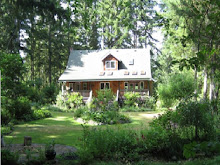
Algae: this came off the outside pretty easily with a floor mop (the squeegee sponge kind) and hot water with a bit of dish soap and a bit of bleach. (That's the "After" shot above.) But the inside still needs doing, and this will be a real pain because of the framing of the walls and the shelves. It will mean lots of stooping over and under things, and lots of individual areas of plastic to wash. I'm procrastinating on this. Plus, I know the plastic will only be good for so long, and it's already five years old. When I was on a ladder scrubbing the roof I noticed there are areas where it has deteriorated enough that it's beginning to crack and split. Which means eventually it will need to be disassembled and replaced. Hmmm.


Seed starting: it occurred to me this spring that I start my seeds in about the coldest place I possibly can. I know greenhouses are supposed to be toasty but mine isn't especially warm, probably because it's in a location that doesn't get much sun this time of year. Which means I not only have to use heat mats, I have to use grow lights. (I know, I know, you're wondering why someone would put a greenhouse in a shady spot. All I can say is (A) our property has lots of trees, (B) it's sunnier through the summer, and (C) I didn't put it there.) Between my greenhouse and Kim's brooder lights for chicks, our spring hydro bill takes a beating. And if I have to use grow lights and heat lamps anyway, why am I not just starting the seeds in the house where at least it's a bit warmer and I don't have to haul water?

Tomatoes: All I have ever grown in the greenhouse (other than some wimpy basil and a single pepper) are tomatoes. Tomatoes, tomatoes, tomatoes. It works pretty well - the plants are protected from rain, they get lots of heat through the summer, and with windows on two sides and a fan in the door I get enough ventilation to avoid blight and other problems. There's just one big issue, though - crop rotation. According to everything I have read tomatoes should be rotated like other crops, to avoid diseases. But in a greenhouse where nothing but tomatoes are grown, that means replacing the soil in the raised beds every year. (Okay, hands up, who wants to volunteer for that job? Anyone?) I've begun to think that I should put the tomatoes into rotation in the vegetable garden, with a plastic roof to keep the rain off, like I have seen some of my neighbours do.

All of which makes me wonder why do I have a greenhouse at all?

Friday, February 24, 2012

Looking on the bright side


Dark Side:
  • Kim and I are sick. Cough, cough.
  • It's raining. No, it's pouring.
Bright Side:
  • It's not snowing.

The rain overnight and through the morning has left the path by the pond flooded, and the chickens are wet and miserable, huddling in the coop or underneath the overhang, trying to keep dry.


But in the greenhouse my little seedlings are warm and dry, thanks to my trusty heat mats, and now they're well lit, too, thanks to my new acquisition: a grow light!


Grow lights are pretty expensive to buy, so I've resisted the temptation until now. February is the month for starting onion seedlings in these parts, but the sun isn't getting high enough in the sky yet to adequately light the greenhouse for the minimum six hours per day. So I decided to bite the bullet, and bought one light to see if it would make a difference.

Kim mounted it to scrap piece of cedar and then hung it on chains so I can adjust the height as the seedlings grow. And that's exactly what they're doing - my leek, shallot, and red, yellow and green onion seedlings are noticeably happier, and the hardy greens I seeded this week (mizuna and pac choi) came up in two days. And I'm happier, too: this grow light, pricey though it was, has made me feel like a grown-up gardener.

In contrast, the other thing that is making me smile in the greenhouse today cost all of $1.95. It's a cap that turns a soda bottle (or in our case, a spring water bottle) into a watering can, gentle enough for the most fragile of plants.


Seedlings need to stay moist, which means daily watering when they're on heat mats. Most gardening manuals suggest misting them, because anything much more forceful than that can break or dislodge a tender new shoot. But have you ever tried misting 8 or 10 trays of pots and soil blocks? It's a good way to invoke carpal tunnel syndrome. So the last time I was in the garden supply store I looked at fancy watering cans with special heads designed to shower tender plants like the most gentle of rain showers. The problem? The price tag: over $40. So I gave up that idea, went to the checkout to pay for the package of cream-coloured nasturtium seeds I hadn't been able to resist, and there in a bucket by the cash register were these caps. I bought two.

They work like a charm. If you just hold the bottle upside down the shower of water is so soft you can hardly feel it, and if you need a more substantial stream all you need to do is squeeze the bottle a little.

A product that works better and costs less. Definitely something for the bright side.

Monday, February 13, 2012

Almost spring


Today it felt like spring. I know it's not really spring, and there are likely to be many more rainy, grey days and maybe even some snow. But for today I can imagine that there is nothing but balmy days and sunshine ahead.

There were the usual signs that winter is on its way out. Snowdrops and aconite are busting out all over...


...and when I cleaned up last year's sedum (aren't the dead flower heads gorgeous?)...


...there were lovely new buds waiting to be uncovered.


Here's another sign that spring is on its way: for the next few weeks the pond is in the fleeting state between covered with ice and snow, and filled with emerging grasses and water plants, which means there are newly visible treasures just waiting to be discovered.


Look closer: can you see? This is the secret gathering place for Frankie's balls that go bouncing off into the water.


In the greenhouse the first leek seedlings are making an appearance...


...and Kim has installed this year's new and improved shelves: cedar, and they smell heavenly.


All of us enjoyed the sunshine today - the chickens...


...and the guitar-playing frog.


But here's the most definitive sign that spring is near: the appearance of Miss Comfort Queen herself, finally emerging from her winter-long hibernation near the wood stove.


Happy Almost-Spring, everyone.

Saturday, April 2, 2011

Busy


The other day I was trying to describe to my friend Margaret what I do every day, now that I don't have a 9-5 sort of job. I fumbled around a bit: "I get up...um...have breakfast and read a bit...um...maybe make some muffins...um...do some tutoring...um..." My gosh, I thought, what do I do?

Then a flash of inspiration. "Of course things are different once the growing season starts," I declared. "Then I'm really busy."

So here's what I've been doing lately, just to show you I really am not a total slug.


Shopping: I bought two new rosemary plants (green in the photo) to replace the three that didn't make it through the winter (dead in the photo). I don't know why I didn't know that rosemary needs winter protection. Now I do. And just in case you thought I might be able to walk into a garden store and walk out with only two rosemary plants, you are sadly mistaken. I did manage to keep my extra purchases to four packages of lily and anemone bulbs. This time.


Weeding: This is my specialty. I may not be able to restore order and peace to the world, but I can manage my flower and vegetable beds pretty darn well. Just so you can appreciate the job I tackled today, it's a 40 foot long rhubarb and blueberry raised bed, with rotting wooden planks separating it from the orchard. So grass and morning glory and all kinds of other evil plants creep in through the rotting wood and make themselves at home in my vegetable garden. This is the before.


This is the after.


Whining: Weeding + sore shoulder muscles = ow, ow, ow. See "Weeding" above.

Basking in the sunshine: The sun was out today and it was heaven.


Watching Chicken TV: The six Red Rock Cross chicks are spending time outside in the tractor, learning all about bugs and grass and worms, so of course we spend almost as much time watching Chicken TV. It's just about the most entertainment that can be had without electricity.

Scolding Frankie: We did this a lot today. Frankie barks at the chicks. He barks at the chickens. He barks at our neighbour Nick. He even barks at us if we're on Nick's side of the fence. He barks at Nick's geese, but stopped barking when they charged the fence and hissed at him. Take that, Frankie. Bad boy.


Building new beds: We built two new 20 foot beds for strawberries. It's actually one bed, with the orchard fence running through the middle. We've built beds against the fence before, and then have had to deal with all the grass growing up between the fence and the bed. See "Weeding", above. This time Kim had the ingenious idea of building the bed through the fence. The cross pieces of cedar actually pass through the fence (we had to cut the wire just a bit), and the whole thing is lined with landscape cloth. I'll let you know how it works.

Planting strawberries: See "Building new beds" above.


Finally believing spring has arrived: Buds on the pear tree and little bluebell-like flowers (what are these? Does anyone know?) in the perennial beds convinced me.


Tending seedlings in the greenhouse: Red, yellow and green onions, leeks, shallots, fennel, nine different kinds of tomatoes (okay, I went a little overboard), lettuce, mache, mizuna, arugula, bok choy, brussel sprouts, broccoli, red and green cabbage, spinach, chard, ground cherries, marigolds, nasturtiums, hyssop, calendula, cilantro, mallow, borage, plantain, parsley, summer savory, and two kinds of basil. So far.


Running from the rain and hail: Sunshine one moment, deluge the next. Yup, it's spring.

Tuesday, May 18, 2010

Cleaning up


Yesterday marked the end of an era - for this year, anyway. Yesterday was the day I packed up all the seeding supplies. Pots, seedling flats, trays, heating mats - everything got emptied out, brushed out, stacked up and put away. The only things left in the greenhouse are the plants that will stay there (tomatoes, peppers, basil) and all the echinacea I haven't found a home for yet.

Sigh.

Seeding time is always a hopeful time. Hopeful as in "This year my tomato plants are going to be strong and healthy, and my onions seeds are all going to sprout." In the early spring anything seems possible. But in my short career as a vegetable grower, I have already come to realize that by the time all the seedling supplies are packed away I am already being forced to recognize that the squash plants got put out too early and aren't doing well, the leaves of the pepper seedlings have sun scald, and something keeps nibbling at the pea shoots. In other words, real life has intruded.

Is it too early to be thinking of next year?

Wednesday, May 12, 2010

Water


We don't have an irrigation system. This is a problem where we are, because even though our winters are famously wet, our summers are hot and very, very dry. Water restrictions for people on municipal water are the norm on Vancouver Island, and things get so crispy dry in the woods that the fire hazard is extreme for most of the summer. So we get caught between needing to water to keep our gardens going (we're happy to let the lawn go brown, but the trees and veggies and perennials need to be watered) and not wanting to use any more water than we need to.

We have been watering mostly by hand, which is a problem in two ways: it's very time consuming (although on a warm evening after supper, with the right frame of mind, it can turn into a Zen sort of experience) and it is not the most efficient way to get water to plants. Misters or drip systems are much better at delivering water to where a plant most needs it, in the most miserly way possible.

But irrigation systems are not cheap. On a couple of occasions we priced out all the hoses and connectors and misters we would need, and even assuming we would do all the labour ourselves it added up to a total that made us gulp.

Kim to the rescue. She found some soaker hoses on sale last year and, in typical Kim fashion, bought them in bulk. I think she came home with a dozen hoses. Throw in a few manifolds, some fancy connectors, and voila - a homemade irrigation system.


It is a bit complicated - mostly because there is only so long a soaker hose can be and still have enough water pressure to soak. This means lots of different hoses for different parts of the garden. So there is a 4-way manifold at the pumphouse, with one outlet going to the perennial beds, one going to the 4-way manifold in the veggie garden, one going to the 4-way manifold in the orchard, and one left free as a tap. The manifold in the veggie garden has one outlet for the artichoke bed, one for the raspberry bed, one for a blueberry bed and one connected to a wand for hand watering the rest of the vegetables. The manifold in the orchard has an outlet for another blueberry bed, one for the rhubarb, one for the blackberry, blueberry and gooseberry bed, and one for the greenhouse.

Are you still with me?

So, for example, if I want to water the raspberries, first I turn on the tap at the pump house, and then the outlet on the manifold that goes to the manifold in the veggie garden. Then I go to the manifold in the veggie garden and turn on the hose second from the right. The rhubarb? Go back to the pumphouse, turn off the outlet to the veggie garden and turn on the one to the orchard, go to the manifold in the orchard, find the right hose and turn it on.

It sounds worse than it is. It's all quite logical. And the nice thing is that the plants get watered well (I am notorious for waving a watering wand in the general vicinity of a plant for 3o seconds and considering the job done), we can do other work while the watering is happening, and with the soaker hoses we don't lose as much water to evaporation. The bad thing is we have to remember to turn the water off. I already anticipate I won't be good at this, so I have bought a couple of mechanical timers (no electricity required) that can be attached to the head of a manifold so that the water will automatically go off after the set amount of time.

Kim put a smaller version of this system in place last year, and it seemed to work quite well. Our well water here has lots and lots of iron in it, and we were worried that it would accumulate in the hoses, plugging all the little holes the water is supposed to soak out of. (This is why the expensive little misters and drippers won't work well for us - according to our neighbour they plug up in no time, and once plugged they are unfixable.) One older hose is indeed toast, but all the new ones Kim bought last year were fine: the iron piled up at the end of each hose, so we just unscrewed the end cap, blasted out all the iron gunge, and we were in business.

Saturday, April 10, 2010

Varmints continued

Our problems with mice and deer continue. You may remember that I had a bit of trouble with mice eating the peas I had planted, and nibbling my seedlings in the greenhouse. You may also remember I dealt with the pea issue by covering the bed with a floating row cover. Ha.

I should thank all of you who might have laughed at me, and refrained, hearing this great plan. Why on earth would I think a floating row cover, even one securely anchored around its perimeter, would keep out a determined and hungry mouse? The very next day I lifted the cover the find the same neatly drilled holes in the soil where the peas had once been. Little buggers.

And there was worse news in the greenhouse. Sure, my chard seedlings had been nibbled to the ground, but chard is easy and quick to grow and I didn't feel so bad having to plant some more. But my pepper seedlings! My carefully pampered and prospering pepper seedlings - now that hurt. The mice didn't even fully enjoy them - they just chewed them off and left the decapitated bits on top of the soil.

Well, I got a bit heated under the collar. Things got even more heated a few days later when Kim went back to the garden and discovered that deer had nibbled the tender leaves of the freshly planted Asian pear tree and the ends of a few of her new blueberry bushes. We should have expected it, but our problems with deer have been sporadic. We had planned to put a wire cage around the tree, and netting over the blueberries - we just hadn't got to it.

I had to figure out how far I wanted to go in the mouse-deterrence battle. Those of you who refrained from laughing at my floating row cover idea may have to turn away for a moment, because my next strategies were to sprinkle cayenne pepper all over the seedlings in the greenhouse, and plug in an electronic rodent deterrer. You can guess how well those worked. So now, for the first time in my life, I am baiting mouse traps with peanut butter every evening, and first thing every morning I make the circuit of all the traps and dispose of the dead mice I find.

I cried with the first one. Only its nose had been caught in the trap, and I wondered how long it had lived, and how much it had suffered. I hated myself. I don't kill things - I grow things. What was I doing?

It got a bit easier after that, mostly because all the mice I have found since then ( and there haven't been that many) have had definitively crushed heads. I could see that their deaths would have been quick. But it still doesn't sit easily with me.

Dealing with the deer problem was easier. No life and death issues there, just some wire fencing around the pear tree and some nylon bird netting for the blueberries. We used netting last year to keep the birds from the strawberries and the deer from the blueberries, gooseberries and blackberries planted along the fence, but we weren't totally happy with the system we had worked out, mostly because the netting kept get tangled in the lawn mower, and it proved to be a pain to keep out of the way when harvesting all those berries we had protected so well.


So this year Kim got serious and came up with a great way of managing it. She screwed stakes to the outside of each raised bed, pulled netting taut over the stakes, and then used more screws at the bottom to hook the bottom edge of the netting, providing good coverage without having netting dragging on the ground waiting for the power mower. When we want to get into the bed we just unhook the bottom edge of the netting and drape it up over the top, easy as pie. Blueberry pie.


These little hooks from Lee Valley have proved very useful. We used the net-to-wire hooks to easily fasten the netting to the existing fence, and the net-to-net hooks to tie back the excess netting at the corners. And they're cheap!

Wednesday, March 31, 2010

Varmints


I am coming to the conclusion I got really lucky with my vegetable garden last year. I didn't know how lucky until things started to go wrong this year. Last year the goddess of gardening smiled down on me. But this year - this is the year of the varmints.

The first problems were with the peas. I planted snow, snap and shelling peas two weeks ago, reminiscing about how lovely the peas were last year, and how easy to grow they seemed to be. I did remember, as I coated the peas in inoculant and planted them in neat little rows, that our neighbour had some problems last year with birds or mice eating his peas before they could sprout. But not me. No ma'am.

I should have known better. Because the next morning I went out to admire my freshly planted bed and saw rows and rows of neat little holes drilled into the soil exactly where my peas had briefly been. They didn't even make it through a single night.

I waited until today, to see whether any escaped the notice of the scavenging creatures, but only two pretty little sprouts have appeared, out of about 200 that were planted. Time to plant again. Only this time, as soon as I was done, the entire bed got swaddled in a floating row cover, anchored all around the perimeter with rocks. No birds or mice are getting in this time. I hope.

I've had new problems in the greenhouse, too. Damping off, which I didn't have any trouble with last year. For those of you who haven't grown vegetables, that's when perfectly healthy seedlings suddenly keel over like they've been cut off at ground level. It's due to a naturally occurring fungus in the soil, which is why many gardeners (including me, now) use sterilized starting mix rather than homemade mix using soil from the garden. And something ate many of my lettuce and chard seedlings. Some were nibbled. Some had completely disappeared. I am not amused.

Friday, March 26, 2010

What's growing

Come with me on a tour of what's growing and blooming these days at Mucky Boots!


The magnolia by the pond is about to burst into blossom. Remember the toddlers in fuzzy slippers? They're about to start dancing!


When we moved here we were so happy to see there are a couple of dogwood trees on the property, including one in the chicken yard and this one in the perennial garden by the pond. In a few weeks this bud will be a beautiful saucer-shaped, creamy white flower.


Also in the perennial gardens is this ribes, which looks its best at this time of year, and the winged euonymous, one of the "ugly plants" I am trying really hard to appreciate more. At least it's leafing out, which makes it look more like an actual plant and less like a weird alien insect.


In the vegetable garden the first official spear of asparagus has appeared...


...the garlic is looking happy, despite having to share the bed with a few stray snowdrops and tulips...


...but the tulips are looking a bit sad, I suspect because of the several late frosts they have had to endure.


In the greenhouse the overwintered lettuce is coming back to life. It is Anuenue, a variety in my very short gardening career I have come to love - crispy, juicy, tasty. What more could you want?


The green onion seedlings (seeded in groups as per Eliot Coleman) are almost ready to transplant outside...


...and the squash seedlings have erupted with a vigorous "Ta Da!" Some seedlings emerge so tentatively and slowly they look like they'd really rather stay in bed a while longer. But when squash are ready to emerge they get right to it.


And that's what's growing at Mucky boots!

Wednesday, March 10, 2010

Gardening mistakes


Two days ago these were happy little tomato seedlings, growing up nestled in warm soil, surrounded by tomato siblings and protected by heat mats and plastic covers to keep them warm, all snuggled up in the greenhouse. Now they are nothing but limp little bits of former vegetation.

Remember the snow surprise we had overnight Monday/Tuesday? Apparently I picked that night, of all nights, to forget to turn on the heat mats. Argh! I wouldn't have thought that would spell the demise of my seedlings, but my max/min thermometer tells me it got down to -5 (Celsius) in the greenhouse that night (all of which I discovered after that cup of tea I promised myself).

I feel like an idiot, because I lost two flats of tomato seedlings last year - not by freezing them to death, but by cooking them. I went to work one morning, enjoyed an unseasonably warm day, and came home that night to a thermometer reading well into the 40s and my tomato seedlings gasping their last breath. You'd think I'd have learned something.

Well, I did, actually. I learned to crack open the door of the greenhouse when it got too warm, and to turn off the heat mats every morning and turn them on every evening. I just forgot. Once. Nature can be so unforgiving.

So today I did the sensible thing and went to Rona to get an electronic timer, which then got installed in the greenhouse with a really long power bar for all the heat mats. After a head scratching half-hour of reading the instruction manual I managed to program the timer to turn the mats off every day at 8 a.m. and turn them back on at 6 p.m. I just came back from a post-supper check, and am happy to announce it all seems to work. Lesson learned.

All is not lost: about 20% of the tomato seedlings survived, and with the exception of my 6 fennel seedlings which were also limp bits when I found them, everything else seems to be fine. And I still have lots of time to catch up - according to my admittedly sketchy records, we're about a month ahead of where we were last year. So I have reseeded what needed reseeding and have resolved to make checking the weather forecast on the Internet part of my morning/evening computer routine.

I hate screwing up. My life would be so much easier if I was perfect.

Sunday, March 7, 2010

Garden resolutions


With the start of the 2010 gardening season, my mind has turned to the task of setting some goals for myself. It may be a sign of too many years of writing professional growth plans as a teacher, or of writing too many SMART goals (you know, Specific, Measurable, Achievable, Realistic and Timely), but it seems like an important thing to do. So, at the risk of appearing like an idiot for not getting this all right the first time, here are my 2010 Garden Resolutions (so far), in no particular order.

(1) Grow better carrots. Last year my carrots were sort of pathetic. They weren't very big, and too many were clubbed, or multi-rooted, or covered in little black lines that I think are a sign of a carrot rust fly infestation. This year I plan to use our longest-pronged pitchfork to loosen up the soil as deeply as I can, and cover my freshly seeded carrots with row covers until the danger of carrot rust flies is past (whenever that is - note to self: check on this).

(2) Remember to fertilize. I was really good at applying lots of lovely compost to each garden bed at the start of the spring, and then again when I planted the fall/winter crops. But somehow I forgot about feeding the plants in between. This year I am going to make compost tea, and nettle tea, and comfrey tea and feed the plants regularly.

(3) Provide better winter protection. I was pretty casual about this last year. For one bed I used a cold-frame cover that was left behind by the previous owners. But it was too big for the bed, so all the cold winter air was free to come in from underneath. I also used a small poly tunnel and some floating row covers, to see how they would work (answer: not so well), and I used straw to mulch the rutabagas. My conclusions: the straw worked just fine, the poly tunnel was way too cumbersome to open for watering, and the floating row cover was pretty much useless. Plus, I was left wondering exactly why I didn't plant anything in the greenhouse, for goodness sake. This year I will make full use of the greenhouse beds, which will mean transplanting seedlings into those beds once the tomatoes are done. And we'll build some better low tunnels out of PVC pipe and plastic, with hinges to tip the cover out of the way for harvesting and watering.

(4) Harvest more herbs. We have mint growing everywhere, which is generally not a good thing since it's so invasive. I have to keep pulling it out and cutting it down or it will take over the garden, but while I do that I might as well harvest the leaves, dry them, and make tea! The same goes for all the oregano and lemon balm we seem to have. I plan to have a lot of fun doing this, and to make it even more fun I have started chamomile and calendula seedlings for even more happy herbal harvesting.

(5) Be nicer to the blueberries. We had a pretty pathetic harvest last year. We think this is because the plants are quite young, we didn't water enough (What did we know? It was our first year!), and the soil wasn't acidic enough. This year we know we can trust our well to give us all the water we reasonably need, and we have a soaker hose system worked out to make sure the water gets used efficiently. As well, we have been saving all our coffee grounds to work into the soil around the blueberries to make it more acidic. We'll be sure to use our new pH meter regularly, to make sure it's working.

I think I understand why I always enjoyed writing professional growth plans in my former life: there's something so hopeful about imagining and planning for future success. I have a picture in my mind of eating a beautiful, well-fed carrot harvested in the middle of a snow storm in December, with a side dish of happy blueberries from the freezer and a cup of mint tea. What could be more perfect than that?

Saturday, February 13, 2010

Rainy day


Another rainy day. With so much experience, I'm starting to be familiar with the different degrees of rain. There's the drizzle that's so light and fine you can persuade yourself it doesn't really count. Then there's the official sort of rain that requires a ball cap to keep your head dry. And there's the kind of rain we had today: rain that calls for boots to tuck your pants into so the hems don't turn into a muddy mess, and a hood to keep the water from running down the back of your neck.

All this rain is making me impatient. There's lots to do outside, but much of it has to be deferred because it's bad for the soil to work it when it's so wet. And other jobs change from pleasantly dirty to a miserable I'm-carrying-around-so-much-mud-on-my-clothes-I-can't-walk kind of dirty. There are still lots of renovations to do inside the house, but with spring so close we can taste it, neither of us feels like embarking on another big indoor project.

So I puttered in the green house today. I spritzed the leek and onion seedlings. I installed my new max/min thermometer. I made another batch of soil block mix and started more seedlings. I amused myself by slicing up empty yogurt containers into markers to label my trays with. I fussed with the arrangement of the heating mats, and stacked empty trays three ways. I may not have been very productive, but I was content to putter away in the warm, humid air, listening to the sound of the rain hitting the plastic of the green house and being reminded that when we camped when I was growing up, rainy days in the canvas tent playing games and reading books were my favourite sort of days.


Kim came to join me a little while later, and decided that since the shelves she had put up for me were already full with seedlings, she needed to build some more. Here she is in the workshop, building brackets. She could have gone out and bought some metal ones, but we're getting pretty good at making do with what we have, when we can.
Related Posts Plugin for WordPress, Blogger...