Tuesday, January 8, 2013

Getting real in the garden


It's that time of year again: the 2013 seed catalogues have come in from my favourite suppliers and now it's time to figure out what the heck I'm going to do in the garden this year.

I really didn't know anything about growing vegetables before we arrived here, and so the last four years have felt like a big experiment, full of the novelty of any new adventure. But now it's time to get real. Or at least real-er. Not that it won't still be fun - it will. But I think I have enough data and experience now to be more realistic about what I can successfully grow. Here's what I'm thinking.


Thought #1: Alliums are the stars at Mucky Boots. The very first thing we planted even before we had moved in was garlic, and we have loved it from the start. There is nothing like home-grown garlic and onions, and somehow the conditions here seem suited for it. So we grow a lot of them: garlic, leeks and shallots, and red, green and yellow onions. I'm very happy with the varieties of red (Redwing) and yellow (Copra) onions in particular - they are indestructible in storage. It may not be the most economically wise thing to do, to devote such a large amount of garden space to growing things that are so inexpensive to buy, but we continue to do it because the quality is so much higher and because it means we get the satisfaction of cooking almost every day with something we grew.


Thought #2: I should only grow what I'm willing to eat. Take beans for example. In my first year's garden I grew lots and lots of beans. Pole beans and bush beans. Yellow beans, green beans, purple beans. Soybeans, filet beans and beans for drying. Consequently I preserved a lot of beans. I pickled beans, I blanched and froze beans, I dried beans. And I learned a few things - namely that there is only so much pickled anything I am willing to eat (I'm much more likely now to reach for something fermented than traditionally pickled), and frozen beans have an awful texture. So awful that most of that first year's frozen beans ended up being given to the chickens. I thought maybe I did something wrong (I blanched for a short period of time, then shocked with ice water, then used a vacuum sealer) so the next year I followed a different set of advice and didn't blanch, I just cut up and vacuum sealed. Still awful.

And the dried beans! My third year I wanted to see how much protein I could get out of the garden so I grew two different varieties of beans for drying. They did pretty well, and I'm happy to know it can work, but it was too much bed space and labour for the result. So last year I planted four measly feet of pole beans for eating fresh, and that was even more than we wanted to eat. This year: three feet.


On the other hand, I keep planting more and more carrots and more and more hardy greens, like chard, bok choy and (gasp!) kale. Between interplanting with onions and covering seedlings with remay cloth I seem to have found a way to produce pretty decent carrots, which we can't seem to get enough of. Ditto for the greens, which seem especially suited to our climate. I can grow them, we like to eat them - this is a recipe for success.


Thought #3: Pelleted seeds are wonderful.  Last year I planted my first pelleted seeds: carrots and lettuce. If you have grown either of those vegetables you know how tiny the seeds are. Which means, unless you have much greater dexterity and better eyesight than I do, a lot of thinning. With the right mindset this can be meditative, but it more usually feels like very fiddly torture. So when I saw seeds being offered with an organic pelleting I decided to give them a try. It's kind of like a candy coating on each seed, which makes them easier to space when you're seeding them in the garden. The seeds cost a bit more, but there's much less wastage. I'm sold on them, and will continue to buy them.


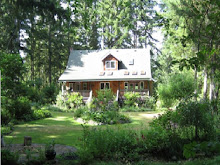
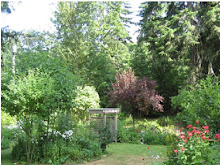
Thought #4: We live in a forest. We better get used to it. You can probably tell from this photo that our vegetable garden is in a clearing carved out from the surrounding forest. Which means it gets pretty good light, but not great light - which limits the kinds of things we can successfully grow. I've figured out we can grow pretty much anything, but not necessarily really well. Eggplant and peppers turn out puny, and winter squash seems to be a hit-or-miss proposition. So I've decided I need to be more strategic in my garden planning, and factor in the amount of sunlight each bed gets when I am figuring out crop rotations.

One crop that needs to be abandoned is grapes. There are three mature vines along one side of the vegetable garden, and we have yet to get anything resembling a harvest. There's just not enough sunlight. And they're grapes for making wine, not for eating, and neither of us is interested in wine making. To top it off, they contribute to the lack of sunlight for the vegetables. Verdict: they're coming down.


Thought #5: Berries are way easier to grow than fruit trees. When we moved to Mucky Boots we inherited a small orchard with three venerable apple trees (Pink Lady, Cox Orange Pippin and a crabapple) and a number of younger trees (cherry, Asian pear, peach and plum). We added a whole bunch more: pear, fig, more apples and plums. And we quickly learned that there is a disease and a bug for every season for every one of those fruit trees. It's hard to grow fruit!

Berries, on the other hand, seem to practically grow themselves. We have all kinds here - strawberries, raspberries, blueberries, blackberries, gooseberries and red currants - and they all do well. Every year some types do better than others, but we've never had a bad year. Plus the investment of time before they begin to produce is much shorter. So we're going to replace the casualties in our orchard (between diseases and bears we have had a few) with more berries, not with more fruit trees. We're going with the flow on this one.

Five thoughts in one day. I better quit while I'm ahead.

Sunday, December 30, 2012

Miniature garden


It rains a lot here on Vancouver Island. Less than it does on the lower mainland (Vancouver, in other words), but during the late fall and winter a day with some sunshine is something to be celebrated.

Needless to say this can get a little depressing, but every once in a while I am reminded of the gifts a climate like ours can bring. Like this miniature moss garden, on the wooden disk at the top of a set of wind chimes. (Click on the photo to get a closer look.) Beautiful and perfect and miniature. Worth a little rain.

Friday, December 28, 2012

One for Alison


Warning: if you are an actual photographer you may just want to go to someone else's blog today, because this post is full of the blurry, badly framed photographs typical of an amateur point-and-shoot-er trying to take pictures at night in a very crowded venue.

If you haven't met Alison yet, you should. She is a warm, witty and wise woman who I think must single-handedly keep North Carolina tourism afloat. Her blog posts are full of wonderful photos about wonderful places to see, and one of these days I'm going for a visit.

Her post a couple of weeks ago about the Daniel Stowe Botanical Gardens was full of lovely photos of the light displays and the decorations, so when we made our traditional trip to the Butchart Gardens in Victoria on Christmas Eve I was inspired to take some photos of my own.

Alison warned me it would be difficult and suggested I bring a tripod. I didn't because I don't have one, and in any case it would have been really difficult to use because of the crowds of people. It was hard enough to get a clear line of sight, and almost impossible to move at any pace other than that of the mass of gawkers. But I tried, and here's what I got.

First, some contrast. This photo was taken during the day in February a couple of years ago...


...and here's the same area at night on Christmas Eve.


Day...


...and night.


There are lights everywhere. I am overwhelmed just thinking about how many person-hours it must take to put up all those lights, and then I feel even worse thinking about taking them all down again. Where do they store them? And how do they keep all those strings of lights from getting tangled?

Some of the trees have lights on every branch...


...and some have no lights at all, except for spotlights on the ground below and a ghostly moon above.


There is a brass band and an ice rink and a carousel and hot chocolate and of course carollers...


...but the main attraction at Butchart over the Christmas season is their Twelve Days of Christmas display. I'm not going to bore you with photos of every day's exhibit (by which I really mean I couldn't get good pictures) but here are a few.

The partridge in a pear tree...


...and the three French hens (note the Eiffel Tower in the background).


The five golden rings are spectacular in real life - big rings of light floating silently in a big pond that looks black at night - but I'm afraid these photos don't do them justice. Here's the serious attempt...


...and here's the goofy attempt to look artistic by moving the camera. (It was Kim's idea.)


My favourite is the eight maids a milking.


The nine ladies dancing caused a lot of controversy and a huge bottleneck, as everyone tried to figure out exactly who the nine storybook characters were. Some were obvious: Alice, Snow White, Little Red Riding Hood, Bo Peep, Miss Muffet (complete with spider) and a generic evil witch (sorry, all you Wiccans out there). But was that Marie Antionette? And who the heck was the one in a green jester's costume, complete with silver shoes and Elton John's sunglasses?


Of course we whipped out our phones and did a Google search, only to find that everyone and their dog had posted a video on youtube of the nine ladies dancing, but nobody listed the characters. We were still puzzling over this at brunch the next day, so I called the gardens and barely got three words out when the operator interrupted me (politely, of course - this is Canada) and said she knew exactly what I was calling about. Marie Antoinette was really Cinderella (we should have guessed that one, except that we had mistaken Mary Mary Quite Contrary's rake for a broom and thought she was Cinderella), and the day-glo green girl was Dorothy from the book version of The Wizard of Oz (because the film version is copyrighted, dontcha know).

Mystery solved, and we all slept better that night.

The spookiest display was the eleven pipers piping, with marionettes modelled after Italian Renaissance characters. The music was playing softly in the background and the figures were moving oh so slightly and oh so slowly, and with the weird lighting making their faces look ghostly it was all just really creepy.


There you go, Alison. I didn't do it justice, so maybe you just need to come up here and see it yourself!

Wednesday, December 19, 2012

More snow


Oh, man...more snow.

When I got up I had no idea it was snowing because it was still dark outside. Until Frankie came in from his 90 second trip to pee and he looked like this.


Can I tell you how frustrated I am with our local weather reporting? You know, the same reporting that didn't predict the blizzard I was caught in on Sunday night. I have been trying for days to find out what the weather today is going to be like. We're planning a trip into Victoria to have dinner with friends, and I don't want a repeat of Sunday's adventure. Well, on Sunday the forecast for today was rain. On Monday it said we would have snow today. Yesterday it said we would have no precipitation today. Now it says it's raining - at this very minute it's raining. You know what? It's not raining!


I think I have an attitude problem...

Monday, December 17, 2012

Big snow. Big melt. Big mess.


We got our first significant snow last night, just in time for me to drive home over the Malahat from an afternoon concert in Victoria. Dark, fog, blizzard, winding mountain highway, very slippery roads. I thought it was just the Malahat, which has its own personal weather microclimate, but the heavy snow continued right into Duncan. But I had good company to keep me calm, and good tires on the car, and I made it home safely. Then I counted my blessings.

This being Lotus Land, the day after a Big Snow means a Big Melt. And a Big Clean Up. We had some tree and shrub casualties because of the weight of the wet snow. One pretty-small tree came down entirely, considerately falling right across the road instead of on an outbuilding. The largest rhododendron lost two large branches, and one big euonymous split right down the middle and will have to come down.


If you have been reading this blog for a while you may remember I have a love/hate relationship with our many euonymous shrubs. First came the hate part: they look like insects. Then came the love part: they are glorious in the fall and have pretty berries. Today we're back to the hate part: every time I shook a weighed-down branch to clear it of snow it would snap back and hit me in the face with its many twiggy frozen bits. First I tried standing in a better position and I still got whacked. Then I stood really far back and used a good kick to clear the snow and I still got whacked. Its going to take some mighty pretty berries to coax me back to loving...

With the sun out the snow is melting like crazy, falling in drops and wet clumps from all the branches overhead. Which can make for an unpleasant surprise if you're in the wrong place at the wrong time. It's quite meditative, watching it fall in the pond - the pond almost seems animated, or stocked with really adventurous fish.


The chickens were understandably hesitant to venture out into the world this morning. The old girls because they know better, and the youngsters because they've never seen snow before. Every few minutes one would wander over to the door, peer down at the white stuff, look to the left to see if there was snow in that direction, look to the right in case it was different weather over there, and then wander back into the warmth and safety of the coop


Kim stood outside the chicken door trying to coax them out with a "Where are my brave little chickie-chickies?" and finally she just shouted at them "What are ya, chicken?"

Thursday, December 13, 2012

Winter garden


My commitment to growing vegetables through the winter has been a little lukewarm. Our first winter here I tried to make use of a cold frame that had been left behind by the previous owners, dragging it into the vegetable garden and using it to cover one of the raised beds where I had planted some hardy greens. There were two problems with it. First, it didn't actually fit the bed, so there was lots of overhang around the bottom edge where cold air could get in, which made the whole undertaking a bit futile. And second, it weighed a frigging ton, which made it difficult to water, weed or harvest.

Our second winter I focused on root crops, like rutabagas, carrots and beets. I learned an important lesson that year: vegetables don't actually grow once the cold weather and short days hit, they just keep. So it's important to get the seeds into the ground way earlier than you think is necessary - in my case in late June or early July) so that the roots are big enough to harvest come October or so. At that point they get mulched to protect them from a hard frost and then the ground acts like a big refrigerator: when you want a carrot you just go out and get one. I didn't really clue into all that, that year, so all I ended up with were roots so small they were barely worth peeling. Except for the rutabagas, which don't get seeded until mid July anyway. They were great, that year.

Our third winter I didn't do much at all. No explanation, I just didn't. But it meant that this year I was more determined to get things right, or at least righter. I got the carrots and beets into the ground on time, and lots of them. The hard frosts we have had, plus the visiting nibbling rabbits, have done a number on the greens...


...but underneath the mulch the roots are big and tasty. A little hairy, and with a bit more bug damage, but really good for soups and stews.


The rutabagas, on the other hand, have been a bust. They developed nice big, healthy tops (at least until a band of marauding chickens got into the garden one day and demolished them) but the roots didn't bulb the way they should have. I'm guessing it was a soil deficiency of some kind, which I'll have to sort out for next year.


Cabbage is an interesting vegetable to grow. As far as I can tell there are cabbages you plant early in the spring for eating in the summer, others that you plant later in the spring for eating in the fall, others that are hardy enough to stay in the garden and harvest through the winter, and others that stay in the garden through the winter in order to have a head start in the spring. 

This year I tried planting a crop of red cabbage to harvest through the winter but my timing was entirely wrong, and they didn't grow big enough before the cold weather hit. They probably won't be in good enough shape to make spring eating, but we'll see. 

I also planted some January King cabbages that should hold their own in the garden through the winter. They got started too late, too, but unlike any of my other winter vegetables these cabbages seem to be still growing, and are developing heads - and beautiful ones at that. (There is a lovely one at the photo at the top of the post.)


The undoubted star of this year's winter garden is the Swiss Chard. I am developing quite an affection for this plant: it's hardy, good for you and apparently indestructible. Plus it looks lovely in the sun.

I decided to give growing under cover another try this year. In August Kim and I constructed a simple hoop house with PVC pipe and zip ties...


...and then in late September when the nights started getting chilly we covered it with fabric fastened to the pipes with these clever U-clips. We never did get around to covering the whole shebang with plastic, but so far the plants underneath have forgiven us and thrived. 


I planted two kinds of kale, more chard, bok choy, spinach and our standby salad green, Bambi. I have already gone on and on about how much I love this gem lettuce, and now I have even more reason. It's December, we have had plenty of cold weather, and it still looks like this.


The bok choy doesn't look as great, thanks to the visiting bunnies. We really have to see to our perimeter defences before spring.


I could get all perfectionist about this, but I think I'll just be happy I'm at least I'm in the right ballpark. Or as my dad would say, on the right side of left, and the upside of down.

Tuesday, December 11, 2012

Assistant


Frankie loves Kim. She is his main mama, whereas I am clearly the okay-but-not-the-real-thing mama. He loves Kim and he loves being a chicken farmer's assistant.

Every morning when Kim wakes up she gets dressed and - even before coffee, which to me is inexplicable - she heads out to let the chickens out of the coops and see to their food and water for the day. This is the moment Frankie lives for. He waits for her whistle and her "Want to help me with the chickie-chickies?" and then he's off like a shot with her out the door.

He isn't usually allowed past The Great Divide - not because he's bad with the chickens, but because like most farm dogs he has a taste for poo. Yuck. So Kim makes him wait on the other side of the gate while she does her chicken duties.


He waits patiently for her to finish, then he escorts her back into the house where he gets to perform his second duty of the day: licking out the scrambled egg bowl.

It's a rough life, being a chicken farmer's assistant.

Sunday, December 9, 2012

I can smell Part 2

I may now be officially the most annoying person on the planet, or at least in my neighbourhood, because ever since my sinus surgery all I do is go around sniffing things and saying "Wow, did you smell this?" or "Wow, that smells good!" of "Wow, that stinks!" Fortunately the people around me are happy enough for me they're cutting me some slack and haven't told me to put a clothes pin on my nose. Yet.

Here are today's favourite smells, in no particular order:

  • hot chocolate
  • a wet forest in the rain
  • thyme plants being crushed underfoot
  • rosemary leaves just stripped from the stem
  • chocolate cookies baking in the oven (which goes really well with the first item on the list)
  • the smoke from a fire in the wood stove, especially outside, and especially when it mingles with the second item on the list
  • Frankie's fur when he comes in from outside smelling of wood smoke and wet forests
  • the fennel seeds I saved this year
  • the dill seeds I saved this year
  • a mandarin orange, just peeled
  • clean laundry
  • freshly steeped green tea, the kind that has the little popped kernels of corn in it
I could go on, believe me. Is this annoying yet?

Here's a picture of Frankie having his own sniff of the seeds I dried. (My apologies for the fact the edge of the tray doesn't quite line up with the edges of the tile. How annoying...)

Friday, December 7, 2012

The song of the eggshells

One of the things a chicken farmer hates to see is a broken and eaten egg in the coop, because once a chicken develops a taste for raw egg it can be a hard habit to break.

For that reason, we don't put raw eggshells into the compost, because the chickens are our compost turners. Instead, we save up the shells until we have a big bowlful, then we bake them in the oven for 30 minutes, and finally crush them into bits and either then put them into the compost or feed them back to the chickens. (This may sound a little cannibalistic to those of you new to chickens, but it's a good way to keep calcium in the chickens' diet.)

Yesterday was eggshell baking day. And here is the song of the eggshells, right from the oven.

Tuesday, December 4, 2012

Popcorn


You might remember that way back last winter, as I was poring through seed catalogues in search of inspiration for my 2012 garden, I struck on pink popcorn as a way to inject a little whimsy into what was starting to feel like a ho-hum routine of planning my plantings for the year.

I didn't devote much space to my first ever corn plants, just a sunny, hot and protected spot where they would have the best possible chance at accumulating the heat units they would need to produce ears. I think I had about two dozen plants in all, most of which produced at least one ear. But the thing with popcorn is that it needs to dry on the plant, which poses a challenge on the West Coast where "fall" means "rain". Some of those ears began to grow mold before they had a chance to properly dry, which meant I ended up with about a dozen adorable little pink ears of popcorn.

I must have been waiting for the stars and moon to align in a certain way, because I didn't get around to trying it until tonight. After Googling instructions for popping corn still on the cob, I put the entire cob (minus its leaves) in a paper bag in the microwave.

Which just goes to show you shouldn't believe everything you read on the internet, because this is what happened.


Smoke was pouring out of the bag like nobody's business, but fortunately I got the whole mess out onto the verandah before the smoke detectors went off. The popcorn was so smoky it was inedible. At least there were no flames...


For my second attempt I decided to go with my head rather than Google, and I stripped the kernels off the cob first. The cobs are small, so I ended up with only a couple of tablespoons of kernels, but didn't they pop up beautifully! Startlingly white, fluffy and - miracles - actually tasting of corn.


As a food-growing experiment I judge it a success. Not a practical one - each corn plant took up a fair bit of space, and to end up with a (very) small bowl of popcorn for every two plants isn't a good yield. But it was a fun project, it kept me interested in my garden through my bout of fourth-year-blues, and it has inspired me to try growing some regular corn next year. That's good enough for me.
Related Posts Plugin for WordPress, Blogger...